Water Damage Restoration in Joplin, MO
A supply line splits behind the refrigerator. A roof gives out during a wind-driven storm and water tracks down into the ceiling below. A washing machine hose blows while nobody's home, and by the time someone notices, water has soaked through two rooms. However it starts, you need water damage restoration in Joplin that answers, shows up with real equipment, and knows how to actually dry a building instead of just mopping the surface.
Joplin Water Damage handles full-service water damage restoration for homes and businesses across Joplin and Jasper County: extraction, structural drying, removal of what can't be saved, and documentation that supports your insurance claim if one is involved.
What's Included in a Restoration Job
Restoration covers the entire job, not just the part you can see standing on the floor. A complete water damage restoration in Joplin typically includes:
- Source control — finding and stopping wherever the water is actually coming from
- Moisture mapping — using meters to find every wet material, including water that's traveled inside walls or under flooring
- Extraction — pulling out standing water with pumps and truck-mounted equipment, fast
- Controlled removal — cutting out only what genuinely can't be saved: soaked pad, wicked drywall, waterlogged insulation
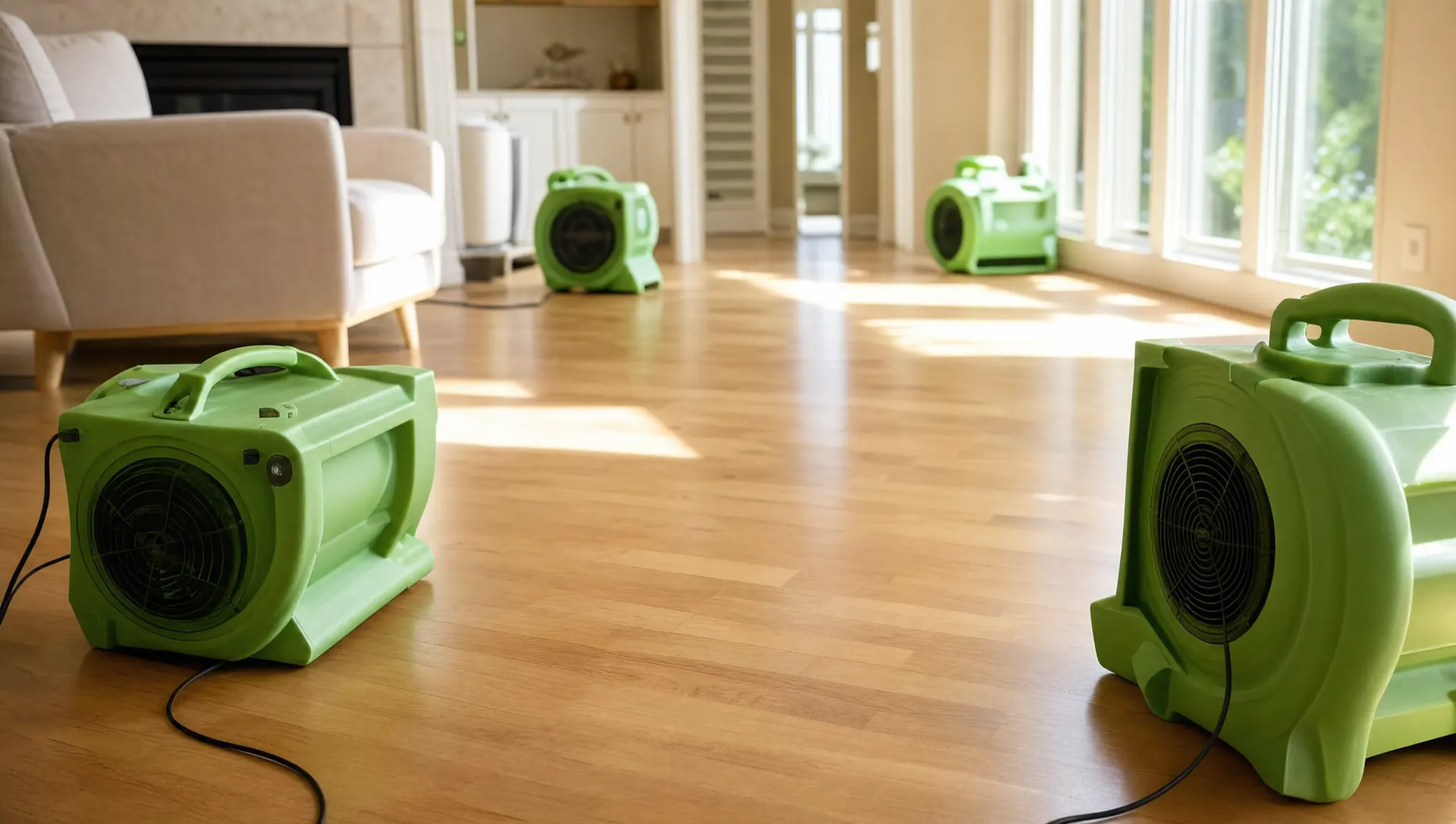
- Structural drying — air movers and dehumidifiers placed by calculation and run until moisture readings confirm the structure is actually dry
- Treatment — antimicrobial application anywhere contamination or early microbial growth is a concern
- Documentation — photos and moisture logs that back up your insurance claim
If the water involved a drain, toilet, or sewer line, that's a different category of job — see sewage backup cleanup. If the water came from outside during a storm, start with storm & flood damage instead.
How the Job Actually Runs
Here's the real sequence on a typical residential loss, so you know what to expect:
- You reach out. Tell us what happened, where the water is, and whether it's still moving.
- Safety check and inspection. Power hazards get ruled out first, then the water gets classified — clean, gray, or contaminated — because that decision shapes everything after it.
- Extraction. Standing water comes out with real equipment. This one step removes more water in an hour than days of air-drying ever would.
- Moisture mapping. Meters trace how far the water actually traveled, often well past where it looks wet from the doorway.
- Removal of what can't be saved. Soaked pad, drywall cut to a clean line above the water mark, ruined insulation — documented before it's hauled out.
- Drying. Equipment sized to the actual space, monitored with readings, typically running for three to five days.
- Verification. Final moisture readings confirm the structure is dry, not just "looks dry," and you get the documentation trail for repairs or a claim.
For more detail on the equipment side of steps three through six, see water extraction & drying.
Why the First Day Matters Most
The difference between a fast response and a slow one isn't small. Within hours, drywall starts wicking water upward and hardwood begins absorbing moisture at the seams. Within a day or two, conditions are right for mold to start on damp organic material, and a closed-up house during a warm southwest Missouri stretch shortens that window further. Past 48 to 72 hours, hardwood starts cupping, subfloor seams swell, and materials that could have been dried now have to be torn out.
There's an insurance angle too. Policies generally expect you to take reasonably prompt steps to limit damage from spreading. A same-day response backs that up. A week-old loss with visible mold invites more questions from an adjuster.
Typical Cost in the Joplin Area
Nationally, water damage restoration typically runs somewhere between $1,300 and $6,000 for most residential jobs, with severe or delayed losses running well past that. Where a specific job lands depends on:
- Water category. Clean supply water costs the least to handle. Gray water costs more. Sewage-contaminated losses typically run $2,000 to $10,000 because of the disinfection and disposal involved.
- How far it spread. One bathroom is a different job than three rooms and the ceiling underneath them.
- Materials involved. Tile and concrete shrug off water. Hardwood, plaster, and finished basements don't, and the older plaster-and-lath walls found in Joplin's mining-era neighborhoods hold moisture longer than modern drywall and need more careful drying.
- How long it sat. Every extra day before extraction adds to the tear-out and treatment cost.
We give real numbers on your specific loss after we've actually seen it — no guessing games, no pressure to sign anything before you understand what you're paying for.
Insurance, Handled Straight
Most sudden water losses are covered by standard homeowners policies. The clean way to handle a claim:
- Stop the water and photograph everything before anything gets moved or thrown out
- Call your insurer promptly to open a claim and get a claim number
- Hold onto damaged materials until documentation is complete — we log each removed item with photos and moisture readings
- Save receipts for anything you had to buy because of the emergency
You get the moisture logs, photo records, and drying documentation an adjuster typically asks for, already organized, instead of trying to piece it together yourself weeks later.
Joplin Homes Aren't All Built the Same
This city's housing stock isn't uniform, and that matters for how water moves through it. Neighborhoods that trace back to the lead and zinc mining years often sit on older foundations, older drain lines, and ground that's been altered by decades of digging — water can find its way in through paths that aren't obvious from inside the house. A few streets over, in areas rebuilt after the 2011 tornado, you'll find newer construction with modern roofing, grading, and plumbing that fails differently, usually through appliance connections or roof penetrations rather than a failing foundation.
We work across Joplin and into Webb City, Carl Junction, Carthage, Duquesne, and Oronogo, plus south toward Neosho and Seneca in Newton County. A century-old cellar downtown and a finished basement in a newer subdivision don't behave the same way once water gets into them, and treating them like they do is how cleanups go wrong.
Get Someone Moving
If water is loose in your home or business right now, every hour it sits adds to the damage and the eventual repair bill. Tell us what's going on and we'll get restoration moving for your property anywhere in the Joplin area.
Need Help in Joplin Right Now?
Tell us what you need and we'll get back to you fast with a free, no-pressure quote.