Water Damage Restoration FAQ — Joplin, MO
Answers to what Joplin homeowners and business owners actually ask when water shows up uninvited. If you're dealing with an active leak or flood right now, skip ahead and reach out — reading FAQs can wait, standing water can't.
How fast do I actually need to respond to water damage?
Faster than feels necessary. Water keeps moving after the source is stopped — it climbs drywall, spreads under flooring, and travels along framing into rooms that still look completely dry. In warm, humid stretches, materials that stayed wet can start growing mold within one to two days. A same-day response usually means drying in place; a delayed one usually means tearing out. Shut off the water source if you can safely reach it, then get extraction and drying started.
What does water damage cleanup typically cost in Joplin?
It depends heavily on the water involved and how long it sat, but most residential jobs typically run somewhere between roughly $1,300 and $6,000, with severe or long-neglected losses running higher. Clean water from a supply line costs the least to handle. Water that sat for days, touched multiple rooms, or came from a drain or sewer line costs more, because of the materials that have to be removed and treated. We give real numbers once we've actually seen the loss instead of guessing over the phone.
Does homeowners insurance cover this?
Usually, for sudden events — a burst pipe, a water heater that fails, an appliance that overflows. What's typically excluded: slow leaks you should have caught earlier, groundwater seeping in on its own, and outside flooding from a creek or heavy runoff, which usually needs separate flood coverage. Sewer and drain backup coverage is often a separate add-on that plenty of homeowners don't realize they're missing until the day they need it. Check your policy before you need it, not during.
What's the difference between clean water, gray water, and black water?
It's a classification that decides how a job gets handled. Clean water comes from a supply line or appliance fill hose and hasn't touched anything contaminated — the least involved cleanup. Gray water has picked up some contamination, like overflow from a washing machine or dishwasher, and needs more careful handling. Black water is contaminated water — sewage, floodwater from outside, or anything that's been sitting long enough to grow bacteria — and requires full protective handling and removal of anything porous it touched. The category gets decided early because it drives every decision after it.
How long does it actually take to dry out a house?
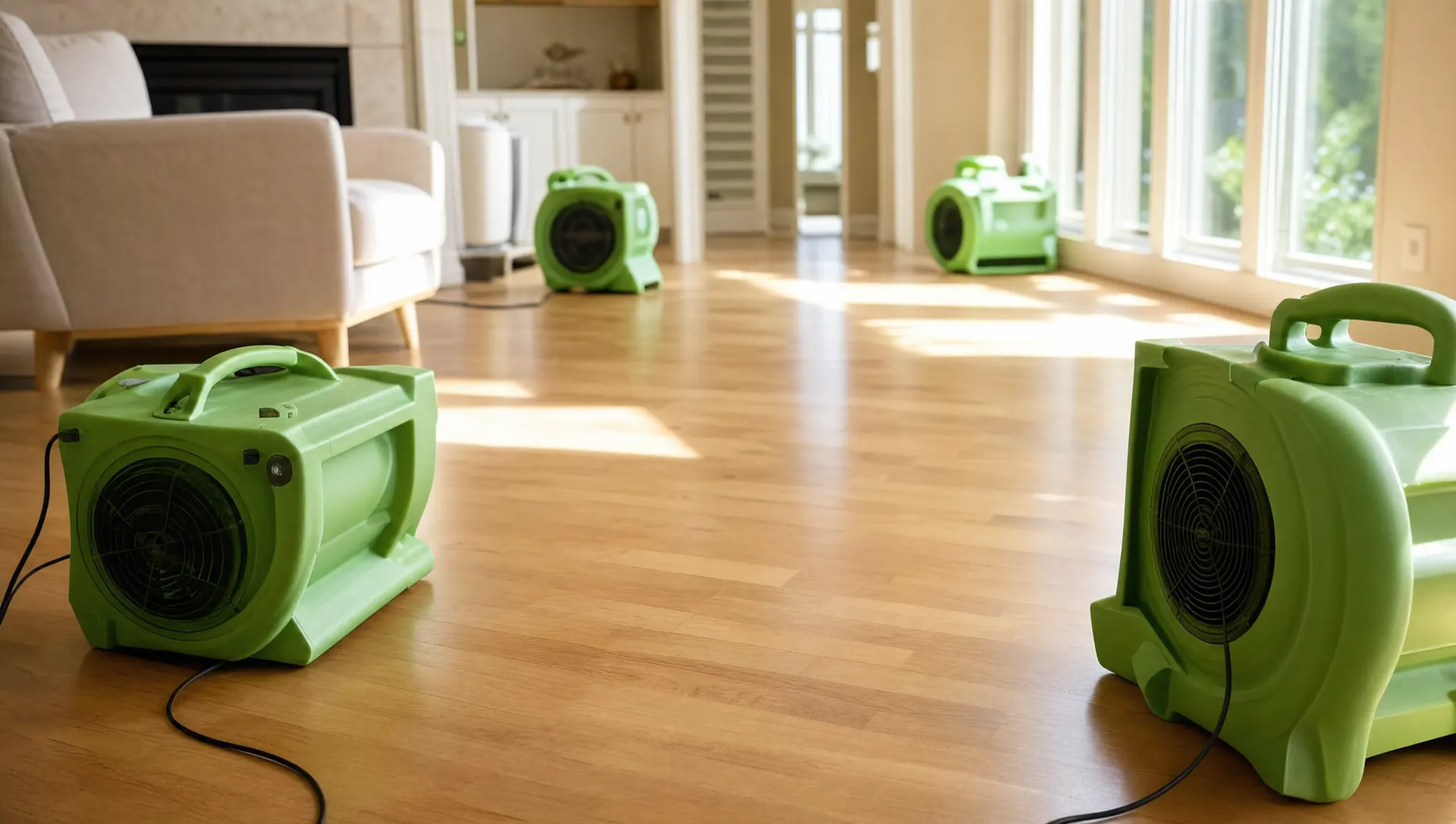
Most jobs run three to five days of continuous equipment operation, sometimes longer for dense materials like hardwood, plaster, or masonry. Older homes in Joplin's mining-era neighborhoods often hold moisture longer than newer construction with modern drywall and insulation. Drying is confirmed with moisture meter readings against a dry standard, not by how a room looks or smells — pulling equipment early because a wall "feels dry" is how hidden mold problems get started.
How do I know if mold has already started?
Watch for a musty or earthy smell, discoloration on drywall or baseboards, or dark spotting in corners and behind furniture along exterior walls. A lot of early mold growth happens where you can't see it — inside wall cavities, under flooring, above a drop ceiling. If materials sat wet for more than about two days, treat it as a real possibility and have the moisture mapped properly instead of guessing from the smell alone.
Can I just dry this out myself with fans?
For a small amount of clean water on a hard floor, maybe — if you catch it immediately and have real equipment. Beyond that, box fans and a shop vac can't extract water from carpet pad, can't reach inside wall cavities, and can't move enough air to keep up with a soaked room in a southwest Missouri summer. If the water touched drywall or insulation, or came from a drain or from outside, professional extraction and drying is what actually gets a structure dry instead of just damp and hidden.
What should I do in the first hour?
Check that it's safe — don't walk through standing water near outlets or a wet breaker panel. Stop the source if the shutoff is reachable. Move anything valuable or electronic out of the water's path. Take photos and video before you move or throw anything away. Then call your insurer to open a claim if the loss might be covered, and get cleanup started. Don't run fans on sewage or floodwater — that spreads contamination through the air instead of containing it.
Why does my basement keep flooding?
A handful of repeat causes show up around here: heavy storms that overwhelm the yard's ability to absorb water and push it against the foundation, a sump pump that fails right when a storm knocks the power out, aging or collapsed drain tile around older foundations, and, in parts of Joplin, ground that's been altered by decades of mining, which doesn't always drain the way an untouched lot would. Cleaning up without addressing the cause just means doing this again next storm. Our basement flooding cleanup page covers this in more depth.
Is a sewage backup actually dangerous, or just gross?
Both, but the danger is the real issue. Backed-up sewage carries bacteria and other pathogens that pose a genuine health risk, especially for kids, older adults, or anyone with a weakened immune system. Porous materials it touches — carpet, drywall, insulation — generally can't be cleaned enough to keep; they have to come out. Keep people and pets away from the area and treat it as a professional sewage cleanup job, not a mop-and-bucket one.
Will my hardwood floors and drywall have to be torn out?
Not automatically — it comes down to how fast the water came out and how long the material sat. Hardwood caught early can sometimes be saved with specialty drying mats before it cups or buckles. Drywall that only wicked up a few inches can often be dried in place; drywall that soaked overnight, or was touched by contaminated water, gets cut out. Carpet pad is almost always replaced regardless. The faster the response, the more of your home makes the "save" list instead of the "replace" list.
What areas around Joplin do you cover?
Joplin and the rest of Jasper County, plus Webb City, Carl Junction, Carthage, Duquesne, and Oronogo. We also reach south into Newton County to cover Neosho and Seneca. If you're looking for water damage help anywhere in that stretch of southwest Missouri, reach out.
Do you take calls outside normal business hours?
Yes — water doesn't wait for a convenient time, so send your request whenever it happens, whether that's the middle of the afternoon or the middle of the night. A pipe that fails on a Saturday gets the same attention as one that fails on a Tuesday morning. The only wrong move is waiting until later to see how bad it looks.
Talk to Us Directly
If you've read this far and you're still standing in water, stop reading and reach out. Tell us what's happening and we'll get things moving for your home or business anywhere around Joplin.
Need Help in Joplin Right Now?
Tell us what you need and we'll get back to you fast with a free, no-pressure quote.